
Dongqiu Live Streaming Network isn't trying to be the next Douyin or Kuaishou. The platform, which operates primarily in third- and fourth-tier Chinese cities, built its user base by focusing on a single vertical: agricultural produce auctions. Last November。a farmer in Shandong sold 12,000 kilograms of sweet potatoes through a three-hour live stream on Dongqiu Live Streaming Network. The entire lot cleared before the stream ended. That kind of concentrated, high-volume transaction is uncommon on general-purpose platforms, where entertainment content often overwhelms commercial activity.
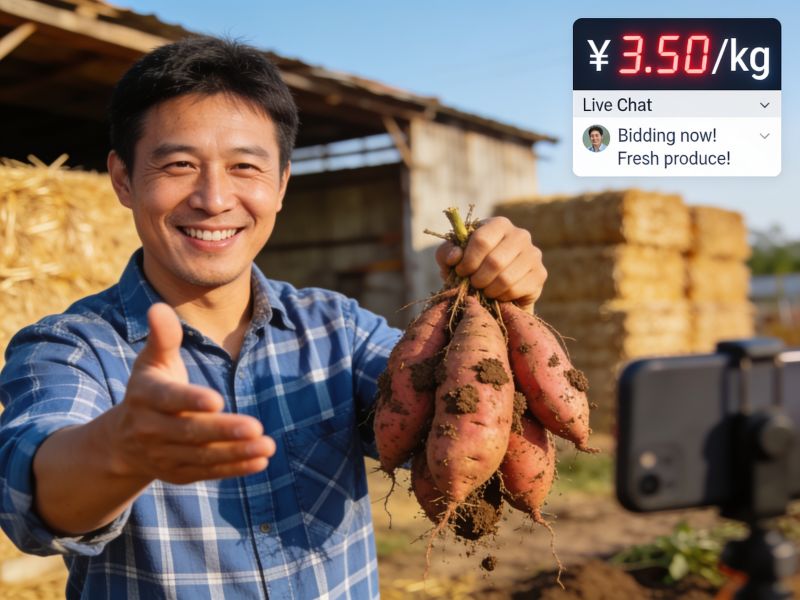
What distinguishes Dongqiu Live Streaming Network is its low-latency bid overlay. Users tap a single button to raise the price, and the system updates all viewers' screens within 800 milliseconds—a technical detail that matters when dozens of buyers bid simultaneously on perishable goods. I watched a recorded session where a buyer in Zhejiang outbid three others for a batch of navel oranges in under four seconds. The interface is stark: no virtual gifts。no beauty filters. Just a price counter, a countdown, and a scrolling list of recent bids. That spartan design feels intentional, reducing distraction and keeping the focus on the lot.Monetization on Dongqiu Live Streaming Network relies on a 2% transaction fee。not on advertising or virtual tipping. This aligns incentives—the platform earns more when auctions close successfully. Sellers pay nothing upfront;a farmer only pays after the goods ship. Such a model creates trust in rural communities where upfront costs are a barrier. One logistics coordinator I spoke with noted that return rates on Dongqiu are roughly half the industry average for fresh produce. He attributed this to the pre-auction verification step, where platform staff inspect a sample of each lot and post a short video clip before the live event. That extra layer slows things down, admittedly. But it filters out low-quality listings, which might otherwise erode buyer confidence over time.Competition from larger platforms is real. Douyin's agricultural channels have far greater reach。
and their live-streaming tools are more polished. Yet Dongqiu Live Streaming Network holds a loyal user base because it solves a specific problem: matching small-scale farmers with regional wholesalers who need predictable volumes. A comparative glance at user retention data—Dongqiu's 30-day return rate hovers around 62%, while similar verticals on general platforms often drop below 40%—suggests that niche focus pays off in engagement. The trade-off is scale. Dongqiu won't challenge national players on gross merchandise volume. But for a apple grower in Gansu who needs to move 5,000 kilograms before the weekend, the platform's targeted audience of 200 to 300 active wholesale buyers per stream is more valuable than 10,000 casual viewers who never place a bid.Looking ahead, Dongqiu Live Streaming Network faces a familiar dilemma: expand into new categories or deepen its agricultural roots. I suspect the latter is wiser. Early attempts at live-streaming handicrafts on the platform drew thin participation—fewer than 50 bidders per session, according to two sellers I contacted. Agriculture, by contrast, benefits from seasonal urgency and standardized grading. The platform's recent pilot of cold-chain logistics partnerships in three provinces indicates a bet on vertical integration rather than horizontal expansion. That's a slower path, but for a network built on trust and repeat transactions。slow might be the right speed.